“FIRST AMONG EQUALS – BINFIELD, WHICH HAS STOOD FIRMLY ON ITS FEET” – Zerno publishing house
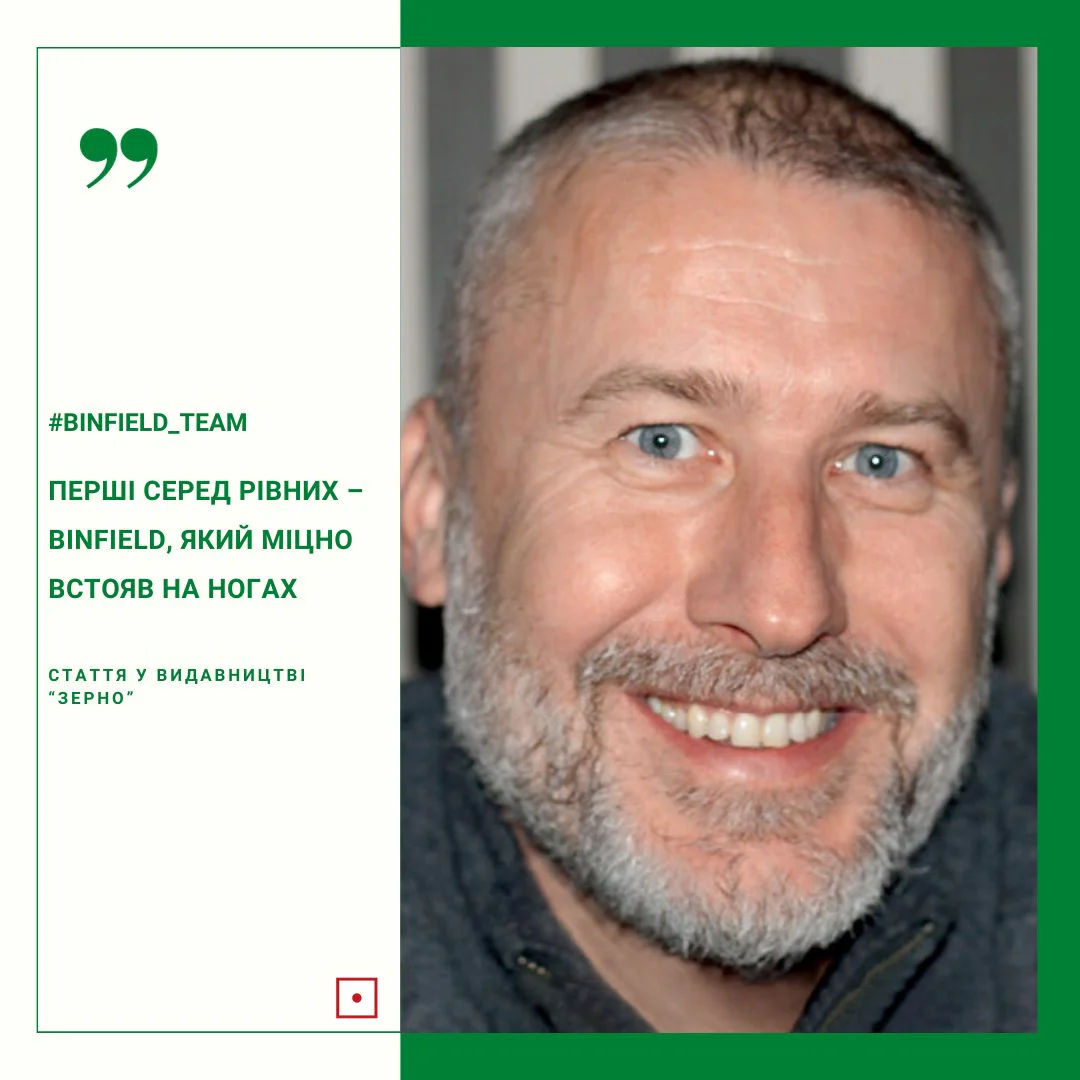
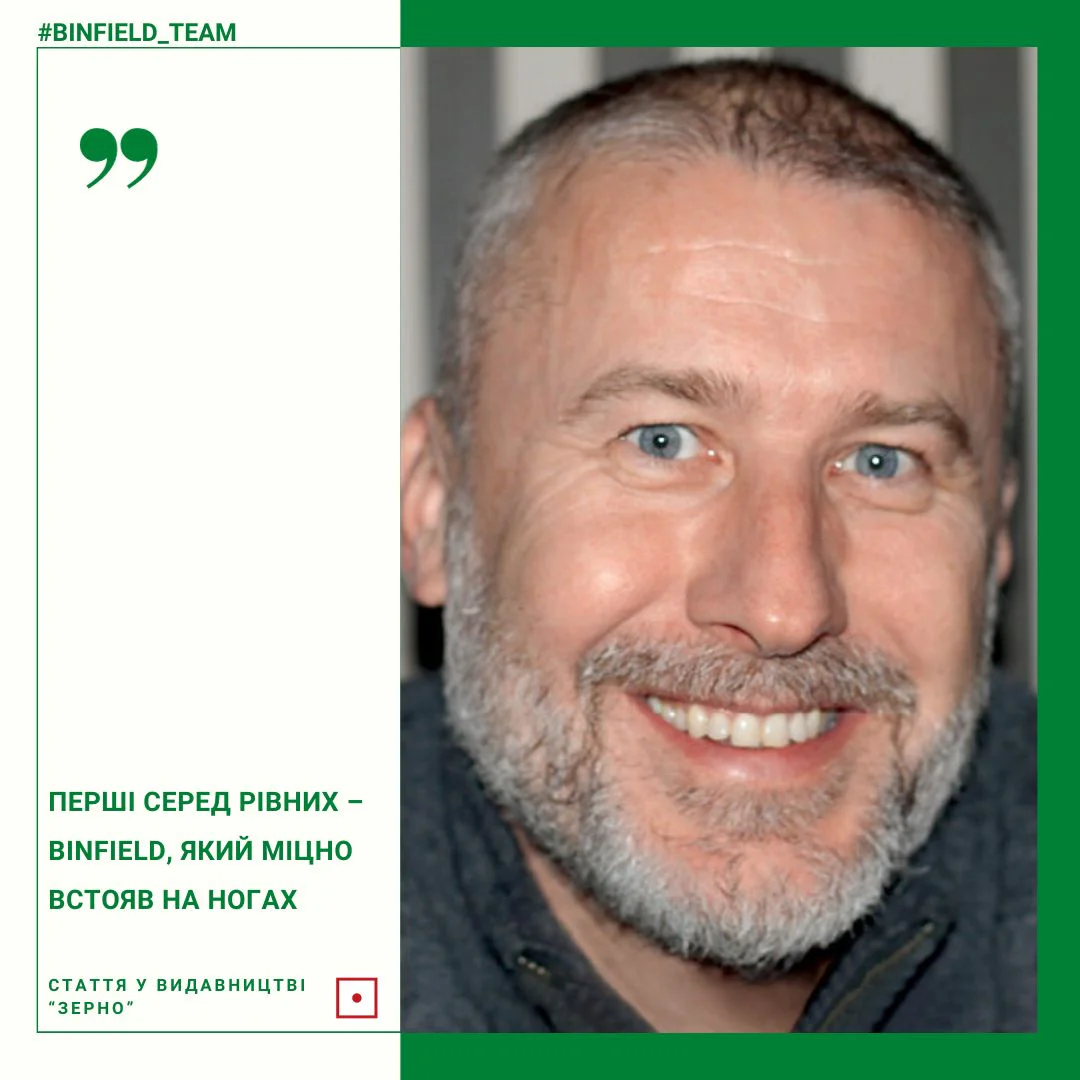
“FIRST AMONG EQUALS – BINFIELD, WHICH HAS STOOD FIRMLY ON ITS FEET” – Zerno publishing house
No fertilizers?” – “Yep,” the farmer nods, “we’ll grow without fertilizers.” – “But it won’t grow!” – “Yep,” the farmer agrees sadly. “Without fertilizers it won’t even come up…”
Unfortunately, there are things in life that are inevitable. A tractor won’t go without fuel, a tractor driver won’t work without a salary, a plant won’t grow without fertilizers. That is why fertilizer imports over the first 10 months of this year amounted to about 2 million tonnes. And importers’ warehouses are empty — fertilizers are taken straight off the trucks.
Companies that bring fertilizers into Ukraine stand firmly on their feet. Although competition is high, this market does not like newcomers or grabbers.
The specialized publication Infoindustry, which tracks the market, ranked the ten largest importers of nitrogen fertilizers, three-component and two-component fertilizers and potash fertilizers — four tables. And BINFIELD is in the top ten in all of them: first in some, third or fourth in others. This made me ask for a conversation with BINFIELD Chief Operating Officer Vsevolod Benitskyi, although it was not easy to catch him in Kyiv. Because logistics are the same for everyone — and that includes those who bring fertilizers to Ukraine…
New companies, new quality
– You are to be envied… You have had such a strong year…
– We did quite well. Many factors contributed to that.
– Probably, above all, the demand for fertilizers?
– There were certain problems with demand. Last year we saw an unstoppable rise in fertilizer prices and, at the same time, a fall in prices for agricultural products. Demand also fell because some territories became unsuitable for agriculture, and in some territories the harvest was stolen by the occupiers… People left the market… And some farmers, because of blocked logistics routes, could not sell the 2022 harvest and therefore had no money. The main consumers of fertilizers in 2023 were agricultural holdings, which guaranteed volumes. Small and medium-sized businesses had an extremely hard year.
– Yes, I know that from my own experience…
– So agricultural holdings were our anchor base, and since we had established logistics routes through the western border back at the end of 2021, we got through 2022 successfully compared to our partners and competitors and worked out the right logistics. Last year we brought in about 100 thousand tonnes of fertilizers. This year we exceeded that volume. There are no final figures yet, but I think it will be 130–135 thousand tonnes. The rankings reflect the real picture. The Ukrainian market needs potassium, and Belarusian potash has left the market. We started looking for new channels and created the company “CRAFT MINERAL”, which joined our group and specializes in potash products. We signed an agreement with Arab Potash, a large Jordanian company, and received two ships this year — 20 thousand tonnes.
– And where did you receive them?
– In Gdańsk. And from Gdańsk we delivered them to Ukraine in rail-car batches. Partly by truck, but road logistics are even more expensive. This project turned out to be successful, the product is of very high quality, and we plan to continue the cooperation and increase volumes. The market will appreciate it — large holdings and distributors received the product, and the results will not be long in coming. Granular potassium chloride is one of the key plant nutrition products. We brought in Israeli phosphorus and NPK, where we hold leading positions and intend to keep them.
Growth during the war
– Your success is remarkable because in both countries where you were active there is a hot, large-scale war…
– Yes, at the end of the year, when we were contracting products, the risks were very high. A ship with phosphorus stood in the roadstead for a month before entering the channel to Izmail. Thanks to God and our Armed Forces, everything worked out, we received these cargoes, and our customers got them. However, the situation is very difficult, and I do not see any improvement next year. Ukrainian agricultural production is threatened with shrinking volumes unless product prices rise and efficient logistics corridors are built. We may go through a serious crisis.
– I remember you positioned yourselves as a specialty fertilizer supplier.
– We are now a broad-profile company and supply all types of fertilizers: from basic classic ones to specialty ones. Life forced us to expand the range; demand for specialty fertilizers is falling because farmers lack the funds for basic fertilizers. So we focus on those.
– Do you work with all the holdings?
– With all those that have no problems.
– I don’t know of any holdings that have no problems…
– Indeed, everyone has problems, but not everyone’s problems affect their operating business and core activities. We take part in tenders — it is an ideal way of working. We work only with transparent, sensible businesses. Nothing can be hidden now; there is information about every movement in a company. Business is open in nature, and by working transparently you move forward.
– And do small and medium-sized companies also work with you, or do they go for cheaper, questionable fertilizers?
– They do; about 80 percent of our customers have stayed with us. Some may have reduced application rates, but we will not lose these customers. People who saved on technology will feel it in their yields, and yields affect economic performance.
– But miracles do happen — sometimes someone who did everything by the book and invested a lot gets a 10% return, while someone who applied nothing gets a smaller harvest but a much higher return.
– That happens one year in ten, and we have to plan for the long term, calculating over three to five years.
– However, the planning horizon is now measured in days.
– I wouldn’t say so. We will feel it in the land market. There is a shortage on the market now. When we see that there are many land offers and nobody is buying, it will mean the market is falling. So far we see the resilience of the agricultural sector. The planning horizon is considerable if people invest money in land, considerable money, and buy land from each other at prices that are inadequate today. There is no economic gain from those sales.
Windfall profits went to military units
– The land market is another paradox… Once in Austria, a farmer whose farm has been known since the 12th century boasted to me that he had bought another 20 ha of land at €100 thousand per hectare…
– That is aristocratic capital; his cushion has probably been stuffed with gold ducats since the 12th century, since the Crusades.
– Did you hire people this year?
– We hired people selectively. Many people did not return from abroad, mostly women. An accountant can work remotely, but a salesperson cannot.
– How do you sell your products?
– Our company has two divisions: one works with agricultural holdings, and there is internal distribution with direct sales to customers. After all, we are focused on selling fertilizers to the end consumer.
– And if you compare 2022 and 2023? How do they compare in terms of energy and mood?
– 2022 had a stressful start to the season. There were hopes for a quick end to the war, and it ended with the autumn sowing by the old standards, despite the unstoppable rise in resource prices. 2023 brought sobriety…
– That spike in fertilizer prices probably brought windfall profits to some…
– Perhaps someone did get unplanned profits, but we did not notice, because we spent them on volunteer work and helping the army: we handed over the necessary resources to military units and brought vehicles for the military from our partners in Europe — one air defence unit had neither generators nor compressors, and after firing a missile they had to drive somewhere to get pressure. Banal things, but they had to be found and delivered. We gave part of that year’s energy to the defence of the country. This year we continued this work, but the state got involved and Western aid arrived. We also supported our employees. For several months we generated no income, but people received their salaries.
Two success factors
– If you compare the two seasons, spring and the autumn sowing of winter crops, how do you assess the state of agriculture?
– People are trying to keep up the level. There were those who declared they would sow without fertilizers, but in the end they still took fertilizers and sowed. Corn plantings fell — it is the most expensive crop. This will be noticeable this year; people are switching to soybeans and rapeseed. Wheat is more stable; it is a deeply traditional crop for Ukraine. Corn will be partly replaced by soybeans, but the soybean market is not unlimited.
– So what is the secret? How did you manage to grow in an absolutely extreme situation? Even half of the top ten agricultural holdings have losses.
– Agricultural holdings suffered more. We are not tied to a specific place. We are dynamic. We can store cargo in Europe and sell everything straight off the trucks; only about 10 percent of the products go through a warehouse. Flexibility is the first factor. And, I think, the second factor is manual management. That is how we managed sales: we met every day and discussed who we could ship to, with whom it was not worth the risk, which routes to use — it helps when the business does not just run on its own. We are shareholders and managers, and at the right moment we take control. A hired manager may not make a decision. I may make the wrong decision, but I will make it. The worst decision is not to decide anything at all.
– The year is coming to an end… What was in greatest demand this year?
– You know, probably ordinary fertilizers after all, commodities. Demand for them grew most noticeably — you cannot sow without nitrogen fertilizers. NPK sold with more difficulty; only large companies used NPK in the same volume as before the war. Most reduced their NPK application volumes; it was the hardest year for this type of fertilizer. Especially NPK with micronutrients, for specific crops…
BINFIELD is preparing, BINFIELD is on its way
– And what was the hardest thing this year?
– Probably logistics. We did not know what to expect; unpredictable problems arose, and we had no idea such circumstances could occur. For example, the situation on the Polish border. It was impossible to predict; it is illogical and contradicts all agreements between Ukraine and the EU. The Polish government is incapacitated, there is a transition period, and political operators are using the situation to their advantage. Ukrainian politicians must approach the situation with a cool head so as not to spoil relations with the Polish people. Slovak carriers are joining the strike, and in Slovakia the government is also still being formed.
– Who would have thought this could affect fertilizers…
– It affects everything. We were lucky that it is not the delivery season now. If the blockade had happened during the delivery season, contracts would have been disrupted; it would have been very difficult. Transport flows need to be diversified, but there is little room for manoeuvre: three or four corridors remain, and they let through as much as they can — the window cannot be widened.
– If you are so daring that you can plan three to five years ahead, what are you planning for next year?
– We plan to invest in Ukraine’s industrial complex. A crisis is the best time to invest. We believe victory will come. It will not be simple. It will not be easy for us. But we need to invest in both the agricultural and agro-industrial sectors. I do not see a rush of investment in Ukraine into, say, fertilizer plants. And they are badly needed. So perhaps we will think about building a plant after the victory. We need to invest in processing.
– And where do you plan to be located?
– Western Ukraine, central Ukraine — all our business is concentrated in these regions. We did not go deep into the east and south, not for political reasons — these are zones of risky farming; even the south of Kyiv Region is already an arid zone. The lack of moisture there is severe. I think vegetable growing from the Kherson region will be replaced in Cherkasy Region; we will watch and keep our finger on the pulse. We will expand logistics capacity and invest in production. We are preparing, working with investment funds — we are on our way.
__________________________________________________________________________________
I really love it when a person talks to you looking you in the eye and does not look away. That only happens with people of real action — you won’t find it in politics, try it yourself. For me, the guys from BINFIELD are a model of Ukrainian business; they are people who create life and an environment. Everything we love so much about Ukraine — lush greenery and generous fields, honest people and sincere friendship, energy and inspiration — is at their foundation. They supply fertilizers, but more than that — hope and confidence in victory. Because such a foundation does not collapse; everything stands and rises on it. Solid as a wall.
Interview by Yurii Honcharenko.
The text of the article is taken from the website of the Zerno publishing house